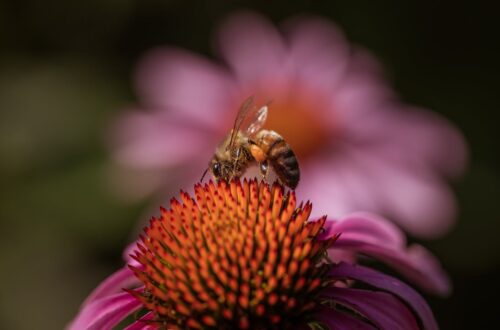
There is an art to beekeeping-facts mixed with intuition. Over time, I hope my intuition grows. As a beginner, I have a long way to go. I’m excited; I’m also nervous. I want my bees to thrive. I realize there are ups and downs in beekeeping. There are circumstances that I can’t control. Bees are wild. I don’t want to force my will on them as much as I want to learn how to listen them. And in the listening, I can know how best to help them do what they were meant to do.
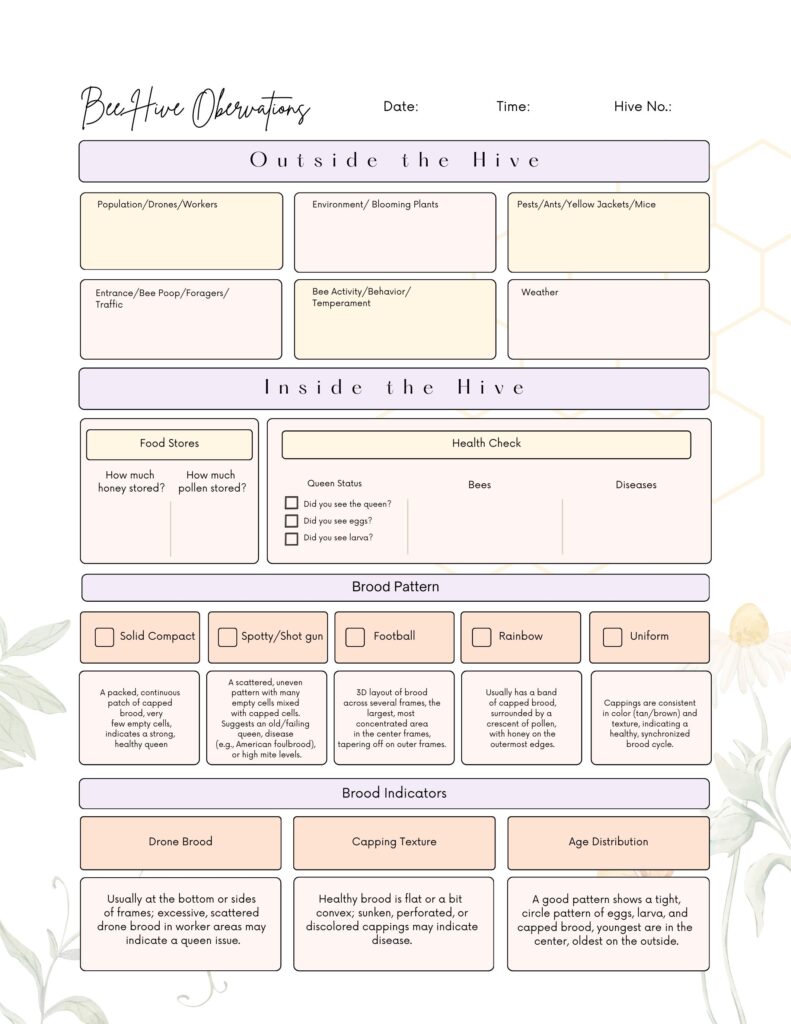
The beehive observation checklist is a place to start. This checklist is meant to be a guide. But checking a hive is all about listening to the bees-not just checking off a box on a list. It’s observing-taking it all in. Paying attention to the tiny details.
First, I want to mark the date on my observation checklist.
The time of day, and which hive I’ll be checking is important to remember as well. As I walk to the hive, I notice the sunshine. The cold breeze blows my hair. Wind is coming from the west? It’s 60 degrees on my weather app, but the breeze makes it seem a bit cooler. I write it down. When I reach the hive, I put my bag full of hive tools gently on the ground.
The weeds are a bit high around the hive. They are starting to reach toward the entrance, so I gently up-root them and toss them aside. The daffodils sweet scent fills the air. Flowers reveal a lot about the bees. It’s good to pay attention to what is blooming. I look around and write down what flowers I see.
Enjoying the sounds, I listen to the hum of the hive.
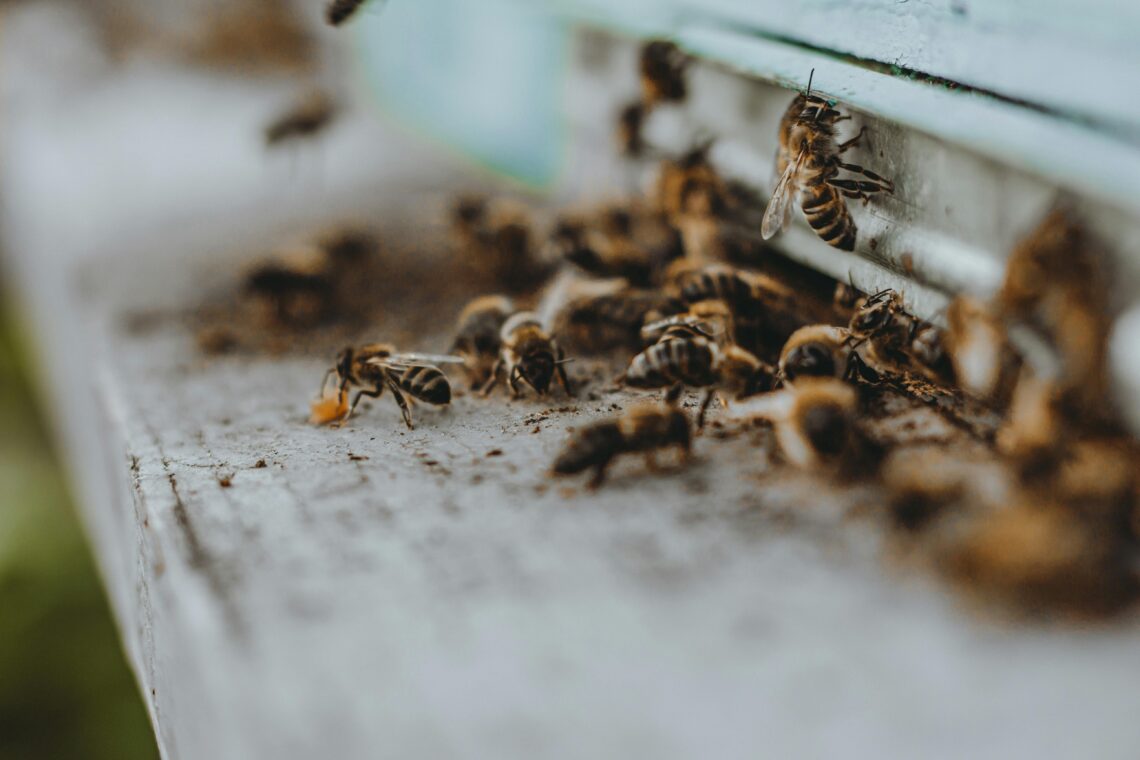
Do the honey bees sound angry? Or just busy? Without disrupting their rhythm, I kneel down and watch them coming in and out of the hive. It’s important not to block their entrance so they don’t feel threatened. I watch the traffic, looking for the drones and workers. Some workers land with heavy burdens of pollen stuffed in the baskets in their legs. Are the workers cleaning up the entrance? How many guard bees are there? Is there a pest they are flitting away with their wings? I write down what I see.
Then I check for poop.
Poop near the hive tells a bee keeper a lot. It’s good to be familiar with poop. Are the bees relieving themselves? Bee poop is usually solid with a pasty consistency. The color is similar to mustard or slightly brown. Healthy looking poop means a healthy little bee.
It’s also good to recognize poop from predators. I glance around the hive checking for yellow jacket, and mice droppings as well. I write down my observations.
It’s finally time to open the hive.
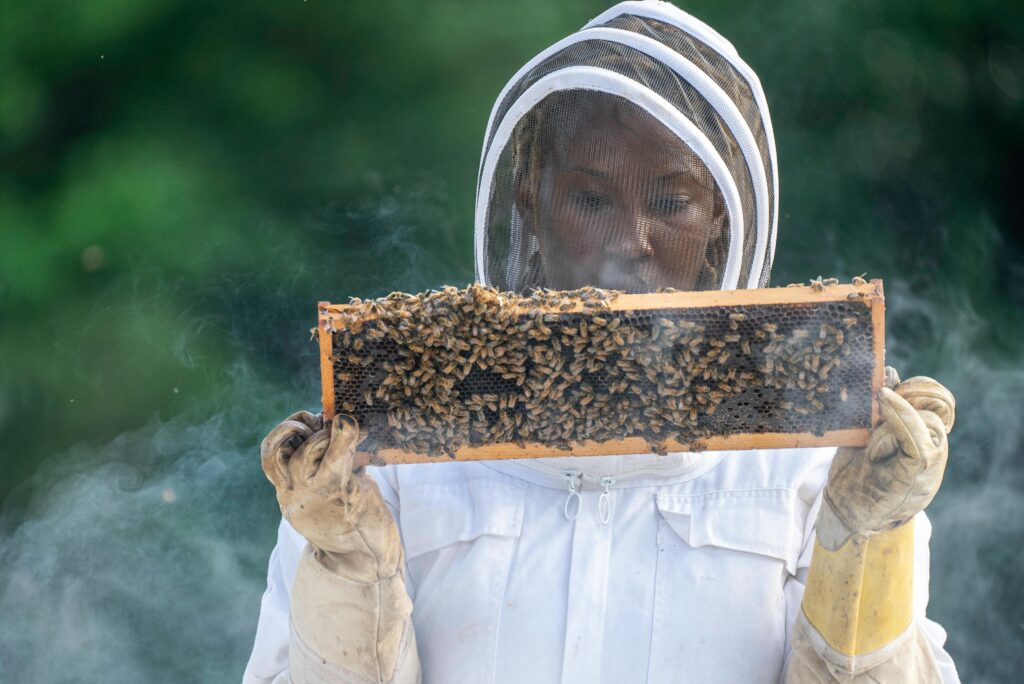
But first I light my smoker. When it’s nice and smoky, I make sure my bee suit is all zipped tight. Then I go and lift the lid making sure I’m never in front of the entrance. It’s best to stand at the back, allowing the bees to enter and exit freely. What I see on top of the hive likely tells me where most of the activity is happening down below. I notice the frames that are busy and write it down.
Starting from the outer most frames (away from the entrance) in my horizontal hives, I make my way to the front. As a beekeeper, I want to respect their privacy while also observing any needs they may have in the hive. I check for how much honey and nectar there is in the hive. I write it down. This is important. If they don’t have enough, I may need to supplement their food.
Checking the brood is next.
The brood is the big story of the bees. At least, in my beginner bee-keeper mind it seems to be this way. Healthy brood means a healthy queen, and a healthy strong queen generally means a healthy bee hive. When I think of the queen, I think of her song. Did you know that queen bees sing inside and outside their cells? The sound is called piping. I listen for the high pitched trumpet-like sound of the queen because this tells me the hive is likely to swarm soon.
It can be difficult to locate the Mama Bee. But the brood tells her story, too. After pulling a frame full of brood out of the hive, I look for three things. First, the queen. She is always trying to sneak downward and then go to the other side, but if my eyes are fast-I can catch a glimpse of her. If I see her, I notice her coloring, her wings and general health. Then I look for the eggs. Baby bee eggs hatch into larva on day four. If I find eggs, I can be absolutely sure that the queen was alive and active three days ago. This is good. And finally, my eyes scan the frame for larvae. Are the larvae growing? is there exposed and capped larvae? The larvae is capped 8 days after they are born. At day 21, they hatch by chewing from the inside of their cell.
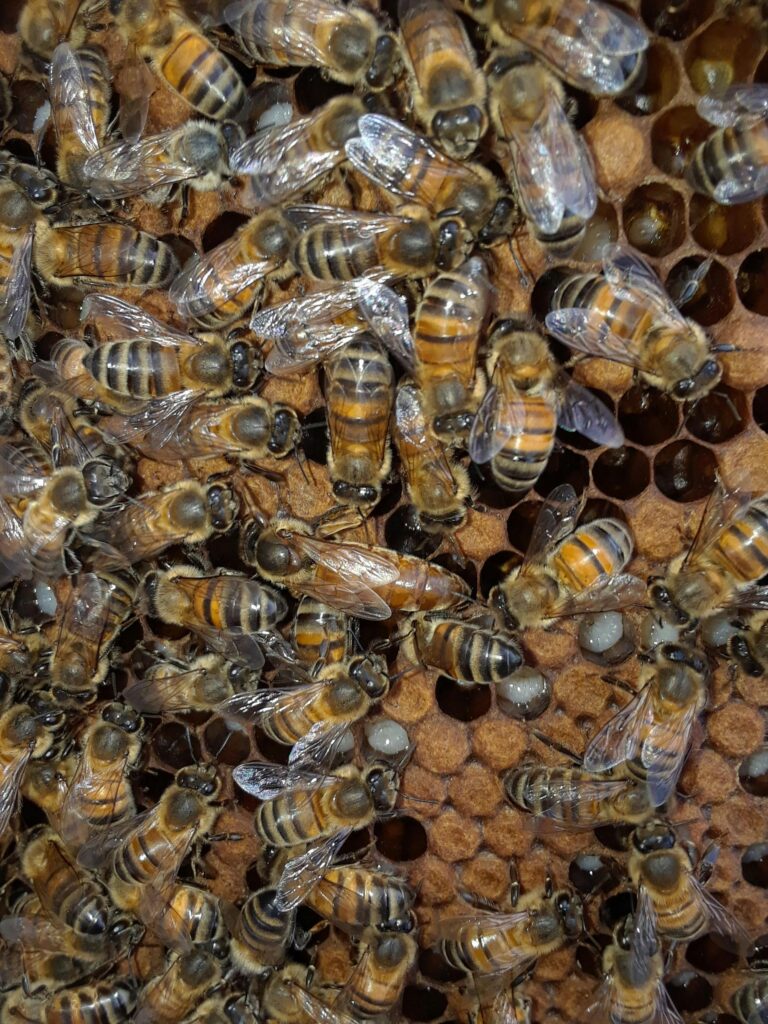
After observing the eggs and larvae, I try to zoom out with my eyes and look at the comb as a whole.
There are brood patterns in a bee hive that I need to be able to recognize. Is it a solid/compact brood pattern? Or a bit shotty? And what about the shape? Does it resemble a football? Or maybe a rainbow? I write all my observations down. I may take photos of the brood patterns to help me remember. Certain brood patterns may indicate disease so I need to be able to recognize each pattern.
Next I look for signs of disease by observing the drone brood cells and the capping texture.
Drone cells are usually placed at the bottom or sides of the frame. If there are a lot of drone cells, or perhaps the drones are scattered all over the frame, then there may be a problem with the queen. Capping should be flat or maybe a bit convex. But it should not be sunken into the cell. Capping color may be light brown, tan, or yellowish-brown. The capping color may darken over time because of traffic across the cells. But it’s good to recognize healthy colored brood because then my eye will notice discolored cells faster.
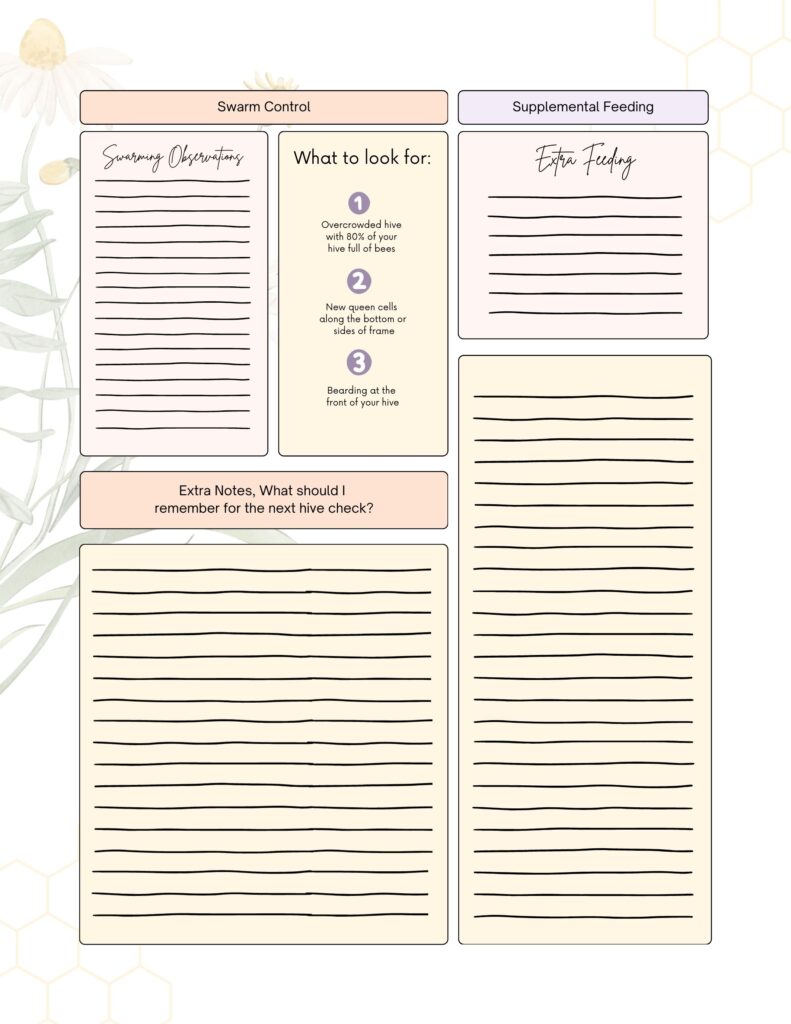
And finally, I check to see if there is a possibility of a swarm.
First, I check to see if the bees are too crowded. If 80% of the hive is full, then the hive has a chance of swarming. I also check to see if there are new queen cells on the bottom or sides of the frame. New queen cells is a sign that a swarm will happen. Sometimes a new queen cell will be in the middle of a frame. If this happens, the workers may think their queen is too old or sick and want to replace her. Another sign of a possible swarm is bearding. Bearding is when bees hang in bunches from the entrance of the hive or a nearby tree branch. But bees may also beard to help regulate the temperature inside the hive-so I have to be sure they are bearding because they are too crowded.
And then I close the hive.
Making sure I put everything exactly as it was in the hive, I gently close the lid. The next time I check the hive will depend on all the observations I notice. Overall, it’s good to let the bees live without me constantly checking on them. But if I listen to them, observe them and get to know them, over time I hope to get a better understanding of what they need.
Conclusion
Beekeeping is an art. And although I’m not officially a beekeeper yet, I want to learn more than just the facts. Knowledge without wisdom isn’t worth much. A person can know a lot and still be really stupid. So, here’s to knowing I don’t know everything. Here’s to being willing to learn. And maybe every now and then pushing against what everyone else does, taking a risk, learning the hard way or discovering something new. And for all of you seasoned beekeepers out there, if there is anything I missed, please let me know. Cheers!